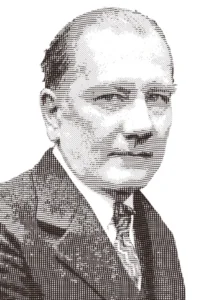
Ernő Dohnányi
Dohnányi was a defining figure in the triumvirate formed by Kodály, Bartók and himself. There are many reasons why he did not become as popular as he might have. On the one hand, in the second half of the twentieth century Dohnányi was regarded as a figure of the past—although his art remained appealing to audiences right up until the Second World War: post-Romantic music with fantastic orchestration, astonishing elegance and lightness, and incredible musical knowledge. If he were a poet, we would call him a poeta doctus. In 1944 he left the country for America, and since—unlike Kodály and Bartók—he had taken part in Hungarian public life during the war, a debate arose as to whether he had been a collaborator.
In Hungary his music was scarcely performed in the second half of the twentieth century; many of his works were premiered here by us (the Budafok Dohnányi Orchestra), or revived by us after a long hiatus. The score of Symphonic Minutes was dusted off for our sake from the storeroom of the Hungarian State Opera House. Dohnányi writes incredibly fine music, which is still very playable even where it occasionally presents difficulties. His music is profoundly human: openly expressed emotions, playful touches; every one of his works is a great pleasure to listen to. When we began performing these works, fortunately many others took up the mission too, so that today the Dohnányi output has become an important part of the repertoire of Hungarian musicians.