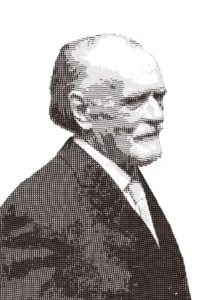
Zoltán Kodály
I belong to the generation that grew up with the Kodály method—which is not really a method at all, but rather a set of teaching principles. To this day I still use solfège. I can sight-sing any melody—reaching for re, fa, si and the rest where needed—because as a child it gave me a real anchor and became deeply ingrained in me. I was fortunate that, while I was at the Academy of Music, Zoltán Vásárhelyi was still the choir director, and he gave a major concert with us every year. I sang in four concerts under Vásárhelyi’s baton, and I remember every minute, every phrase and every gesture of them. Especially important to me was the concert at which we performed Kodály’s defining works. A good many of the ideas voiced in Understandable Music came from Vásárhelyi.
Whether he put it exactly like that or not, I no longer know, but the meaning was certainly that, and it has stayed deeply etched in my memory. Zoltán Kodály left behind a body of work that stands at the absolute pinnacle of Hungarian culture: the anthem-like Psalmus Hungaricus, for example, which lifts one out of one’s everyday frame of mind. Kodály’s orchestral works set the orchestra of the day a rewarding challenge, and demonstrate perfectly what we can achieve through folk music. In this, Kodály was unrivalled. He believed folk music was strong enough that, using the techniques of classical musical thinking, we could achieve anything with it. Béla Bartók took a different path in many respects, but what Kodály left us not only profoundly shapes our musical thinking but has also become part of our national identity.
What is more, my generation was still able to hear the authentic versions of these works, ‘approved’ by Kodály himself. I would add that his finest works are not those written for teaching purposes, but his choral works. The most essential element of Kodály’s educational principles is that a child always has their voice, and with it is capable of wonderful things. The truth is that what one child cannot sing, twenty children can, and forty can sing it in such a way that it is simply amazing. I am convinced that if school singing teachers today based their lessons more on the joy of singing together, we would be in a very different place.